

The Psychology of Talking to Strangers Online: Why It Feels Easier Than You Think

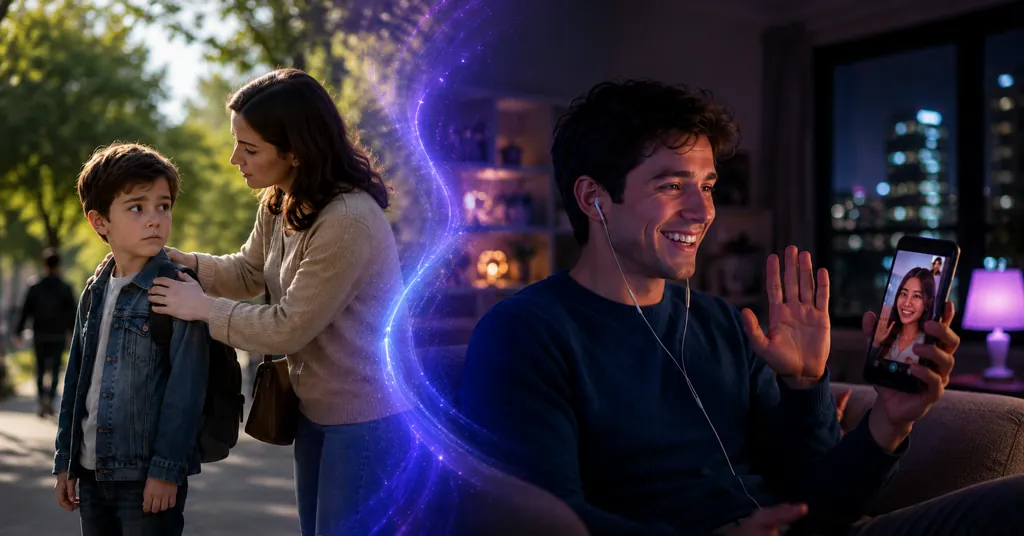
For most of our childhood, the message is clear:
Don't talk to strangers.
It's practical advice, and for good reason.
Yet somewhere between childhood and adulthood, that rule quietly changes.
We ask a stranger for directions while traveling. We end up chatting with the person sitting next to us on a long flight. We exchange restaurant recommendations with someone we've just met in another country. Increasingly, we also open a 1-on-1 video chat expecting the next conversation to be with someone we've never seen before.
None of this feels particularly unusual anymore.
In fact, millions of people choose to do it every day.
That raises an interesting question.
Why does talking to strangers online often feel easier than we expect?
The answer has less to do with technology than with human psychology. While digital platforms have made conversations easier to start, the reasons people enjoy them are deeply rooted in how we build trust, satisfy curiosity, and respond to new experiences.
The internet didn't invent our desire to meet new people. It simply removed many of the barriers that once made those encounters difficult.
Why Conversations With Strangers Feel Different
Imagine walking into a room where nobody knows who you are.
No one has expectations.
No one remembers what you said yesterday.
No one has already decided what kind of person you are.
That clean slate changes the way people communicate.
Psychologists have long observed that first conversations are shaped by curiosity rather than history. Instead of trying to maintain an existing relationship, both people are simply trying to understand each other.
Questions come naturally.
"Where are you from?"
"What brought you here?"
"Have you always lived there?"
They're simple questions, but they do something important—they create momentum.
Unlike conversations with close friends, where everyone already knows the backstory, conversations with strangers are built around discovery. Every answer leads to another question, and every question reveals something unexpected.
That's one reason these interactions often feel surprisingly engaging, even when they only last a few minutes.
The Freedom of Being Unknown
One of the biggest misconceptions about talking to strangers is that it's always uncomfortable.
For many people, the opposite is true.
There's a certain freedom in speaking with someone who has no preconceived idea of who you are.
Your job title doesn't matter.
Your social circle doesn't matter.
Neither does the version of yourself that friends and family have come to expect.
You're simply another person having a conversation.
That sense of freedom explains why people sometimes find themselves discussing topics with strangers that rarely come up with people they see every day.
It's not because strangers automatically feel safer.
It's because they don't carry the emotional history that close relationships often do.
A conversation can exist entirely in the present.
It doesn't need to fit into years of shared memories or future expectations.
That's a surprisingly liberating experience.
Curiosity Is Stronger Than We Realize
Think about the last time you met someone from a country you've never visited.
The conversation probably didn't begin with anything profound.
It started with ordinary questions.
"What's it like where you live?"
"Is the weather really that cold?"
"What food should I try if I visit?"
Curiosity doesn't usually arrive as a grand idea.
It shows up in small moments like these.
Human beings are naturally interested in lives that look different from their own. Different cultures, languages, routines, and perspectives all create opportunities to learn something unexpected.
That's one reason social discovery has become such a powerful part of modern online communication.
Many people don't join a conversation because they're looking for a lifelong friendship.
They join because they're curious about someone else's world.
And sometimes, that's enough.
Not Every Conversation Needs a Goal
One reason online conversations feel different is that they don't always have an objective.
In professional settings, conversations usually exist to solve a problem or exchange information. With friends, you're often catching up on things that happened since the last time you talked.
Talking to someone you've just met works differently.
There isn't a history to revisit or an agenda to follow. The conversation develops on its own.
It might begin with football and end with travel.
It might start with a discussion about music and become a conversation about daily life in another country.
Or it might simply last a few minutes before both people move on.
None of those outcomes are failures.
In fact, that's part of the appeal. Without expectations, there's less pressure to make every interaction memorable.

Why Video Feels More Natural Than Endless Messaging
Text messaging is convenient, but it leaves a surprising amount open to interpretation.
A short reply can seem unfriendly.
A delayed response may be mistaken for disinterest.
Even a joke can be misunderstood when tone and facial expressions disappear.
Video changes the rhythm of a conversation.
People interrupt each other naturally. They smile before finishing a sentence. They react without thinking about punctuation or emojis.
Those small details make conversations feel closer to the way people communicate in everyday life.
That's one reason live video chat has become increasingly popular over the past few years. Rather than replacing text, it offers something different—a chance to interact in real time without constantly wondering how the other person interpreted what you said.
Online Conversations Are Becoming More Global
A decade ago, most online friendships formed between people who already shared something in common—a school, a workplace, or an online community.
Today, geography matters far less.
It's perfectly normal for someone in Brazil to chat with someone in Germany, or for two people living thousands of miles apart to discover they enjoy the same music, movies, or football club.
These conversations rarely feel like formal cultural exchanges.
They're usually much simpler than that.
People compare weather.
Recommend local food.
Talk about weekend plans.
Laugh at differences they hadn't considered before.
Those everyday exchanges often leave a stronger impression than carefully planned travel guides because they're personal rather than scripted.
Technology has made these interactions easier, but curiosity is still what keeps them going.
What We've Learned From LivCam Users
At LivCam, we've noticed that people rarely arrive with a detailed plan for who they want to meet.
Some join after work to unwind for a few minutes.
Some are practicing another language.
Others are simply curious about who's online.
The conversations that stand out aren't always the longest ones.
Often, they're the ones where both people leave feeling like they learned something new—even if it's just how someone on the other side of the world spends a typical weekend.
That's also why 1-on-1 video chat continues to resonate with so many users.
Without a crowded room or dozens of competing voices, conversations tend to feel more relaxed and more focused.
The Internet Has Plenty of Content. Conversation Is Different.
Every day, people scroll through thousands of posts, short videos, headlines, and comments.
Most of that content is designed to be consumed quickly.
Conversations work differently.
They ask for participation.
You don't know exactly where they'll go or what you'll hear next.
That uncertainty is part of what keeps them interesting.
Unlike an algorithmically curated feed, another person can surprise you.
They might recommend a book you've never heard of, describe a tradition from their hometown, or offer a perspective that challenges your own.
Those moments don't happen every time.
But they're memorable when they do.
Looking Ahead
As online communication continues to evolve, people are becoming more selective about how they spend their time.
Many no longer want another endless feed to scroll through.
They're looking for experiences that feel more immediate and more human.
That's one reason video conversations continue to grow alongside social media rather than replacing it.
The two serve different purposes.
One helps people keep up with what's happening.
The other helps them connect with someone who's experiencing it.
Final Thoughts
Talking to someone you've never met doesn't guarantee an unforgettable experience.
Most conversations are brief. Some are funny. Others fade from memory almost as soon as they end.
Every now and then, though, a conversation lingers.
It might be a story about growing up somewhere you've never visited, an unexpected recommendation, or simply the feeling that, for a few minutes, the internet felt a little more personal than usual.
That's difficult to design, and impossible to predict.
Platforms can make it easier for people to meet, but they can't manufacture genuine curiosity or chemistry. Those still come from the people on either side of the screen.
Frequently Asked Questions
Is talking to strangers online a normal way to meet people today?
Yes. Online conversations have become a common way to meet people with different backgrounds, interests, and cultures. Many people use them to practice languages, exchange ideas, or simply enjoy casual conversations.
Why do conversations with strangers sometimes feel easier?
Strangers don't carry the expectations that often exist in long-term relationships. Without shared history or assumptions, conversations can feel more open and less pressured.
Does video chat create better conversations than text messaging?
It depends on the situation, but many people prefer video because facial expressions, tone of voice, and real-time reactions make communication feel more natural.
Can online conversations become lasting friendships?
Sometimes they do. While many interactions are brief, shared interests and regular communication can turn a first conversation into a long-term friendship.
Why do people choose 1-on-1 video chat?
Many users enjoy 1-on-1 video chat because it removes distractions and creates space for more focused, genuine conversations with people from around the world.