

Why Is It Sometimes Easier to Talk to a Stranger Than Someone You Already Know?

Sometimes, the easiest conversation you'll have all week is with someone you've never met before.
A delayed flight. A long train ride. A coffee shop with only one empty seat.
Most people have experienced a moment like this. Someone nearby says a few words, you answer almost automatically, and before long you're talking about places you've visited, food you miss from home, or why your football team never seems to win when it matters.
Nothing about the conversation feels unusual until you think about it later.
Why was it so easy?
A few days earlier you might have had dinner with friends you've known for years, yet the conversation barely moved beyond work, traffic, or weekend plans. Meanwhile, a complete stranger managed to hold your attention for half an hour.
It's a small contradiction that many people recognize but rarely stop to think about.
Why does talking to strangers sometimes feel more comfortable than talking to people who already know you?
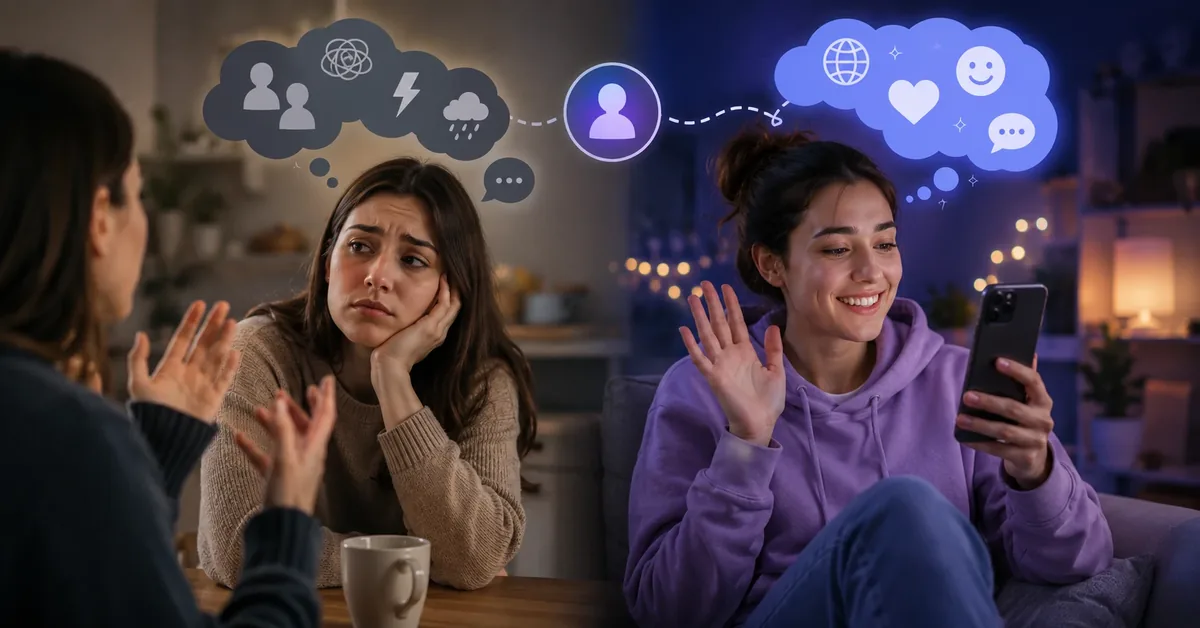
The answer isn't that strangers are better conversationalists. More often, it's because the conversation begins without expectations, history, or assumptions. Those three things quietly shape almost every interaction we have, and we only notice their influence when they're suddenly gone.
Why Doesn't a Stranger Feel Like a Stranger for Very Long?
There's a brief window at the beginning of every first conversation where neither person knows what's coming next.
That uncertainty is surprisingly valuable.
When someone has known you for years, they already have a mental picture of who you are. They know your habits, your opinions, the stories you've told a dozen times before. Conversations naturally fall into familiar rhythms because both people are filling in the blanks before the other has even finished speaking.
Meeting someone new works differently.
Nothing is assumed.
If you mention that you enjoy hiking, they'll probably ask where you've been. If you say you're learning Spanish, they'll want to know why. Every answer creates another question because the conversation is built on discovery rather than memory.
It's one of the few situations where people listen simply because they don't already know the answer.
Are We Less Afraid of Being Judged by Someone We Don't Know?
It sounds backwards at first.
Most people assume strangers are the people who judge us the most.
In reality, close relationships often carry far more expectations.
Friends remember what you believed last year. Family members expect familiar reactions. Colleagues already have an idea of how you'll respond before you've even spoken.
A stranger has none of that.
They're meeting you exactly as you are in that moment.
That doesn't mean you'll instantly become vulnerable or start sharing your deepest thoughts. It simply means you're free from the quiet pressure of staying consistent with a version of yourself that already exists in someone else's mind.
For many people, that makes conversation feel lighter.
You're not continuing yesterday's discussion.
You're starting today's.
Why Do Ordinary Questions Work So Well?
People spend a surprising amount of time searching for clever conversation starters.
The irony is that memorable conversations rarely begin with memorable questions.
"Where are you from?"
"What brought you here?"
"Have you always lived there?"
On paper, they're ordinary.
The interesting part comes after.
Someone mentions they grew up near the ocean, and suddenly you're comparing childhood memories. Someone talks about learning English, and the discussion shifts toward travel plans. A casual question about food turns into recommendations you'll probably save for your next holiday.
The opening question isn't carrying the conversation.
Curiosity is.
Good conversations don't happen because someone prepared the perfect line. They happen because both people remain interested long enough to see where the discussion goes.

Is Small Talk Really as Meaningless as People Think?
Small talk often gets dismissed as something to "get through" before a real conversation begins.
But that's not really how conversations work.
Very few meaningful discussions start with life's biggest questions.
They usually begin with weather, coffee, football, music, or where someone happens to be calling from.
Those topics aren't memorable because they're profound.
They're memorable because they're comfortable.
They give two people a shared starting point without asking either person to reveal too much too quickly.
Think about the last genuinely interesting conversation you had.
There's a good chance it didn't begin with anything remarkable.
It simply kept going.
Why Does Video Change the Conversation?
There's a reason so many conversations feel different once they move from text to video.
Text asks us to interpret everything. A short reply can seem impatient. A delayed response might look like disinterest. Even a joke can land the wrong way when the other person only sees words on a screen.
Video removes much of that guesswork.
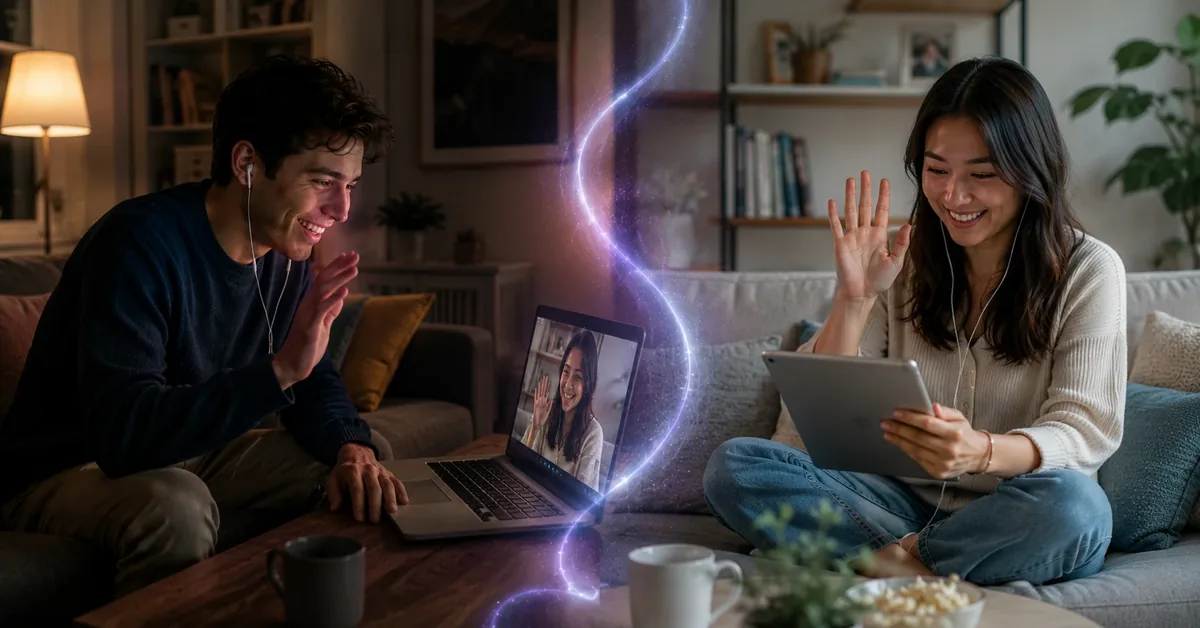
You notice someone's smile before they finish a sentence. You hear them laugh at their own story. You catch the brief pause when they're trying to remember the name of a city they visited years ago. These details don't necessarily make a conversation deeper, but they make it easier to understand the person behind it.
That's one reason live video chat has become such a natural extension of online communication. It brings back many of the signals that people rely on in face-to-face conversations without requiring them to be in the same place.
For many users, the experience feels less like sending messages and more like meeting someone for coffee—just through a screen instead of across a table.
Why Do Some Conversations Stay With Us?
Most conversations disappear almost as quickly as they begin.
You exchange a few sentences, wish each other a good day, and move on.
Every so often, though, one sticks.
It's rarely because someone said something extraordinary. More often, it's the unexpected direction the conversation took.
You might start by asking where someone is from and end up learning about a local festival you've never heard of. A discussion about football suddenly turns into travel advice. A recommendation for a TV series becomes a debate about cultural differences.
Looking back, it's difficult to pinpoint exactly when the conversation became memorable.
That's because meaningful conversations usually don't announce themselves. They unfold gradually, almost without either person noticing.
Can Online Conversations Become Real Friendships?
Some people assume that conversations online are temporary by nature.
Sometimes that's true.
Not every chat needs to become a friendship, and not every interesting person needs to become part of your everyday life.
At the same time, many friendships begin in surprisingly ordinary ways.
A few conversations turn into regular catch-ups. Shared interests lead to another call the following week. Before long, you've stopped thinking of the other person as someone you met online.
The technology fades into the background.
What remains is the relationship itself.
That's one reason people continue to meet new people online even though social media already gives them endless content to scroll through. Content entertains. Conversations create experiences.
They're not competing with each other—they simply serve different purposes.
What We've Learned From Conversations on LivCam
After watching millions of conversations begin on LivCam, one pattern appears again and again.
People rarely arrive looking for the "perfect" conversation.
Most simply want one that feels real.
The first few moments are usually uncomplicated.
Someone says hello.
Someone asks where the other person is from.
Another person notices a guitar in the background or asks about the weather.
From there, the conversation develops naturally.
Some last only a few minutes.
Others continue far longer than either person expected.
The difference usually isn't a clever opening line or an impressive profile. It's whether both people stay curious long enough to keep asking questions.
That observation has influenced how modern video chat platforms are evolving. Fast matching matters. Simple interfaces matter. But the goal isn't to impress users with features—it's to help them get to the conversation as quickly as possible.
Maybe We've Been Looking at It the Wrong Way
The question isn't really why strangers are easier to talk to.
A better question might be why conversations become harder once assumptions begin to replace curiosity.
When we already know someone's opinions, routines, and stories, it's easy to stop asking questions. Familiarity saves time, but it also removes some of the discovery that makes first conversations enjoyable.
Strangers remind us what curiosity feels like.
Not because they're mysterious, but because there's still something left to learn.
That doesn't make new conversations better than old friendships.
They're simply different experiences, each offering something the other can't.
Final Thoughts
The internet has made it easier than ever to reach people in different cities, countries, and time zones.
What's interesting isn't the technology itself. It's how quickly a simple conversation can make someone on the other side of the world feel familiar.
Sometimes that happens in five minutes.
Sometimes it never happens at all.
Most conversations are ordinary, and that's perfectly fine. They don't need to change your life to be worthwhile.
A good conversation can simply make an ordinary evening a little more interesting, introduce you to a new perspective, or remind you that people living thousands of miles apart often have more in common than they expect.
Perhaps that's why talking to strangers never really went away.
The places where those conversations happen have changed, but the reasons people keep having them haven't changed very much at all.
Frequently Asked Questions
Why does it sometimes feel easier to talk to a stranger?
Because strangers don't bring existing expectations into the conversation. Without shared history, people often feel more comfortable asking questions, expressing opinions, and simply being themselves.
Can online conversations lead to real friendships?
Yes. While many conversations are brief, some develop naturally over time through shared interests, regular communication, and mutual curiosity.
Why is video chat becoming more popular than text messaging?
Video allows people to see facial expressions, hear tone of voice, and respond in real time, making conversations feel more natural than text alone.
Is small talk actually important?
Yes. Small talk helps people find common ground. Most meaningful conversations begin with simple topics before naturally moving into deeper discussions.
How does LivCam help people connect?
LivCam makes it easy to start 1-on-1 video chat with people from around the world. By reducing the time between matching and conversation, the platform encourages natural interactions that can lead to new friendships, cultural exchange, or simply an enjoyable conversation.