 LivCam
Video Chat Trends 2026
How Gen Z Is Using Video Chat Differently From Millennials in 2026
Exploring how two generations communicate, build friendships, and discover new connections through real-time video in 2026.
Social media may look similar on the surface — but the way people use it tells a very different story. Millennials built online friendships through slow-burn conversations, shared communities, and trust earned over time. Gen Z expects something faster, more spontaneous, and more real. The gap between these two approaches is widening — and video chat sits right at the center of it.
of Gen Z users prefer real-time video or voice over text-based messaging
more likely than Millennials to initiate a video conversation with someone they just met
consistently rated as the most meaningful format across both generations
Source: LivCam user behavior data, Q1 2026
Why Video Chat Is Growing Faster Than Traditional Messaging
Text messaging isn't going away. But waiting minutes — or hours — for a reply no longer feels acceptable to a growing number of users.


Video chat fills that gap with something text can't replicate:

Faster back-and-forth — conversations happen in real time
Stronger emotional read — tone, expression, and body language all come through
Less room for misreading — fewer crossed wires, fewer awkward follow-ups
More memorable moments — a five-minute video call can outweigh hours of scrolling
This shift is most visible among younger users. But it's not exclusive to them. These changes are part of broader live chat trends that continue to reshape how people communicate online.
How Millennials Built Friendships Online
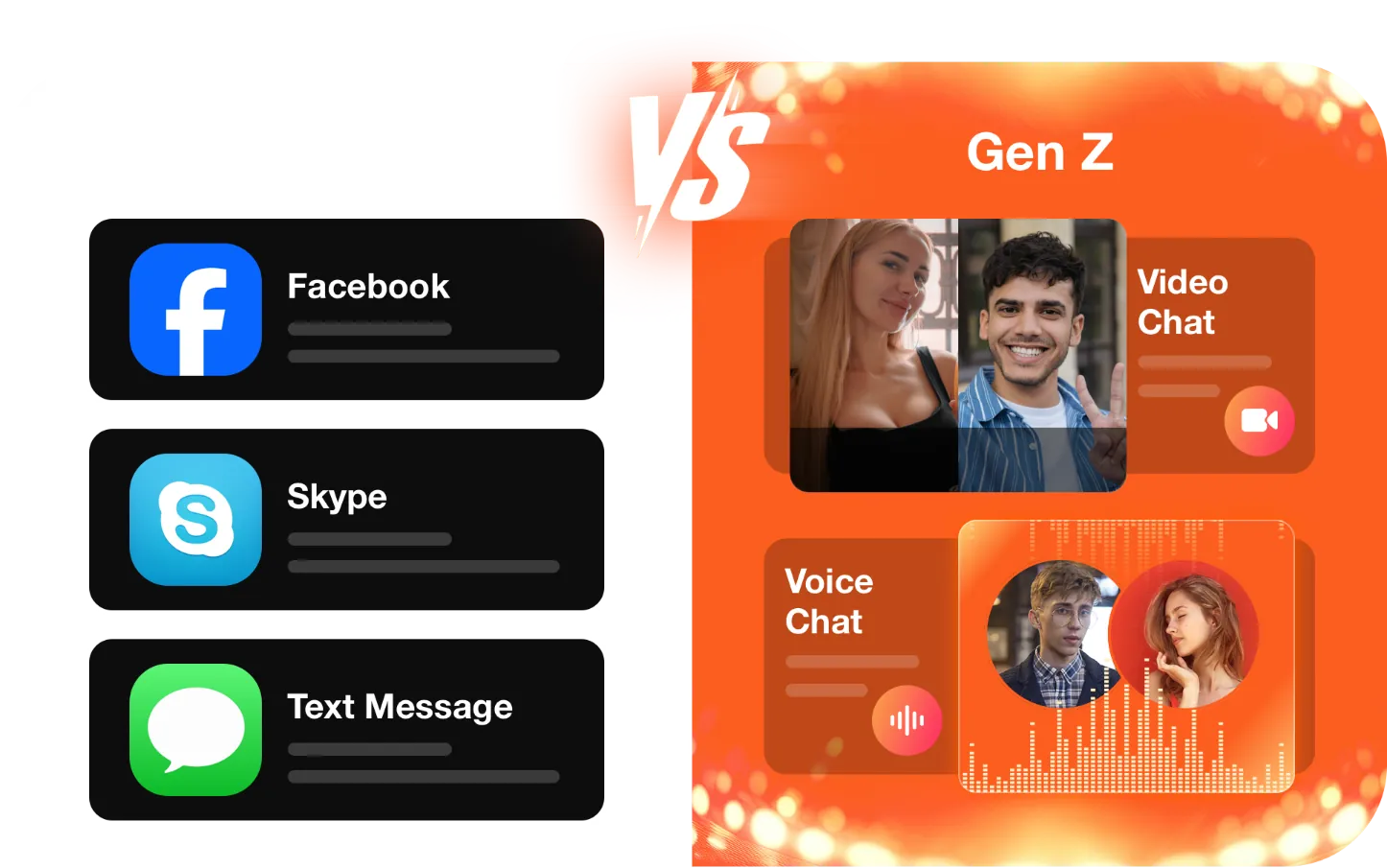
Millennials were the first generation to experience online social networking at scale — and they shaped the playbook most platforms still follow. Growing up with MSN Messenger, Facebook, early Skype calls, and forum communities, Millennials learned to build relationships incrementally. Trust came first. Video came later.
 Text message
 Social media
 Voice call
 Video call
 Friendship
This wasn't slow by accident. It reflected the tools available and a cultural norm: you earned a video call.

Long-Term Conversations
Millennials often prefer getting to know someone through sustained messaging before moving to video. The process matters as much as the destination.

Shared Communities
Facebook Groups, hobby forums, and niche communities remain the primary discovery mechanism — people connect around a shared interest before connecting with each other.

Familiarity First
For many Millennials, comfort and established trust are prerequisites for face-to-face video interaction, even online.
How Gen Z Approaches Online Communication
Gen Z didn't learn to use the internet. They grew up inside it. Smartphones, short-form video, and instant global access have shaped an entirely different set of expectations. For this generation, waiting is friction — and friction kills engagement.

Video Before Text
Many Gen Z users find it easier to jump into a quick video call than to sustain a long text exchange. The video is the introduction.

Discovery Over Networking
Rather than building and maintaining large friend lists, Gen Z tends to prioritize exploring — finding new people, new perspectives, new experiences.

Authenticity Matters
Curated profiles are losing ground. Unfiltered reactions, real conversations, and genuine moments feel more trustworthy than a carefully edited highlight reel.
What Gen Z Looks For In Video Chat Platforms
Across conversations and usage patterns, a few preferences come up consistently among Gen Z users:

Fast Matching
Every second of waiting is a moment someone considers leaving. Instant matching keeps the experience feeling alive.

Global Reach
Meeting someone from a different country isn't a bonus feature — for many Gen Z users, it's the point.

Mobile-First Experience
Most interactions happen on phones. A platform that feels designed for desktop will lose mobile users within seconds.

Low Stakes, Easy Exit
Gen Z users prefer environments where moving on from a bad-fit conversation is simple and judgment-free. No awkward goodbyes. No pressure.
Why 1-on-1 Video Chat Continues To Grow
Group chats and livestreams have their place — but they're not shrinking the appetite for one-on-one conversation. If anything, the opposite is happening. 1-on-1 video offers something group formats struggle to replicate:




A five-minute 1-on-1 conversation can be more memorable than an hour spent in a group call where no one quite knows when to speak.
What We Are Seeing On LivCam
One pattern has become impossible to ignore: people aren't just looking for content. They're looking for someone to talk to. On LivCam, users consistently come back for many of the same reasons people seek out modern video chat platforms today:




In 2026, LivCam users average 4.2 conversations per session — and return rate among users who complete a first conversation sits at 68%.People aren't scrolling. They're talking.
Gen Z vs Millennials: How They Approach Online Communication
The differences between Gen Z video chat habits and Millennial video chat habits reveal how quickly online communication is evolving.
| Communication Habit | Millennials | Gen Z |
|---|---|---|
| Starting Point | Usually begin with text messages, profiles, or shared communities | More likely to jump directly into video, voice, or live interactions |
| Trust Timeline | Trust is built gradually through repeated conversations | Trust develops through authenticity and real-time interaction |
| Primary Goal | Stay connected with existing friends and networks | Discover new people, experiences, and communities |
| Comfort with Strangers | Generally more cautious when meeting people online | More comfortable interacting with new people through digital platforms |
| Ideal Format | Messaging, forums, social groups, and occasional video calls | 1-on-1 video chat, voice chat, live streams, and spontaneous conversations |
Neither approach is wrong. But platforms that understand this distinction build better experiences for both.
The Future Of Online Friendships


The next generation of social platforms won't simply help people share content. They'll help people connect.
Video conversations, voice interactions, and real-time communication are becoming central to how people build relationships online.
The future of social networking looks less like a profile page and more like a conversation.
Frequently Asked Questions
-
Do Gen Z users prefer video chat over texting?
Many Gen Z users increasingly prefer real-time communication such as video chat and voice calls because they feel more authentic and immediate. -
Why is video chat becoming more popular?
Video chat creates stronger emotional connections and allows people to communicate more naturally than text alone. -
What is the difference between Gen Z and Millennials online?
Millennials often focus on maintaining existing relationships, while Gen Z tends to prioritize discovering new people and experiences. -
Is 1-on-1 video chat still growing in 2026?
Yes. Many users prefer 1-on-1 conversations because they feel more personal and meaningful than large group interactions. -
How does LivCam help people meet new friends?
LivCam allows users to connect through live 1-on-1 video conversations, making it easy to meet people from different backgrounds, cultures, and countries.