

What to Say on Random Video Chat: 25 Conversation Starters

Start a random video chat with a friendly hello and one easy question about everyday life, music, food, or hobbies. Listen to the answer and share a little about yourself. A related follow-up can keep the exchange going. You do not need a clever opening line or a perfectly planned conversation.
The difficult part is often the first few seconds. A new face appears, neither person knows what to say, and a simple introduction suddenly feels harder than it should. Having a few questions in mind can give you somewhere to begin.
These 25 conversation starters are suggestions for adults meeting other adults online. Choose questions you would enjoy answering yourself. You do not need to work through the whole list, and the other person does not have to answer every question.
The goal is a comfortable exchange where both people have room to speak.

How to Start a Random Video Chat
Begin with a greeting before moving into a question:
“Hi! How is your day going?”
If the other person responds, introduce an easy topic:
“I have been looking for new music. What have you been listening to lately?”
A little context makes a question feel more natural. Instead of suddenly asking about food, you could say, “I just finished lunch, and now I am curious: what dish would you recommend trying?”
Keep the opening short. A long introduction can be difficult to follow, especially if there is a connection delay or you speak different languages.
Avoid opening with comments about someone’s body, demands to show their room, or questions about their exact location. If a book or musical instrument is already visible, you can ask about that interest without asking them to reveal more of their surroundings.
Everyday Conversation Starters
Everyday questions offer an easy starting point because they leave the other person free to decide how much to share. They can answer with something small, such as a good meal, or introduce a topic they care about.
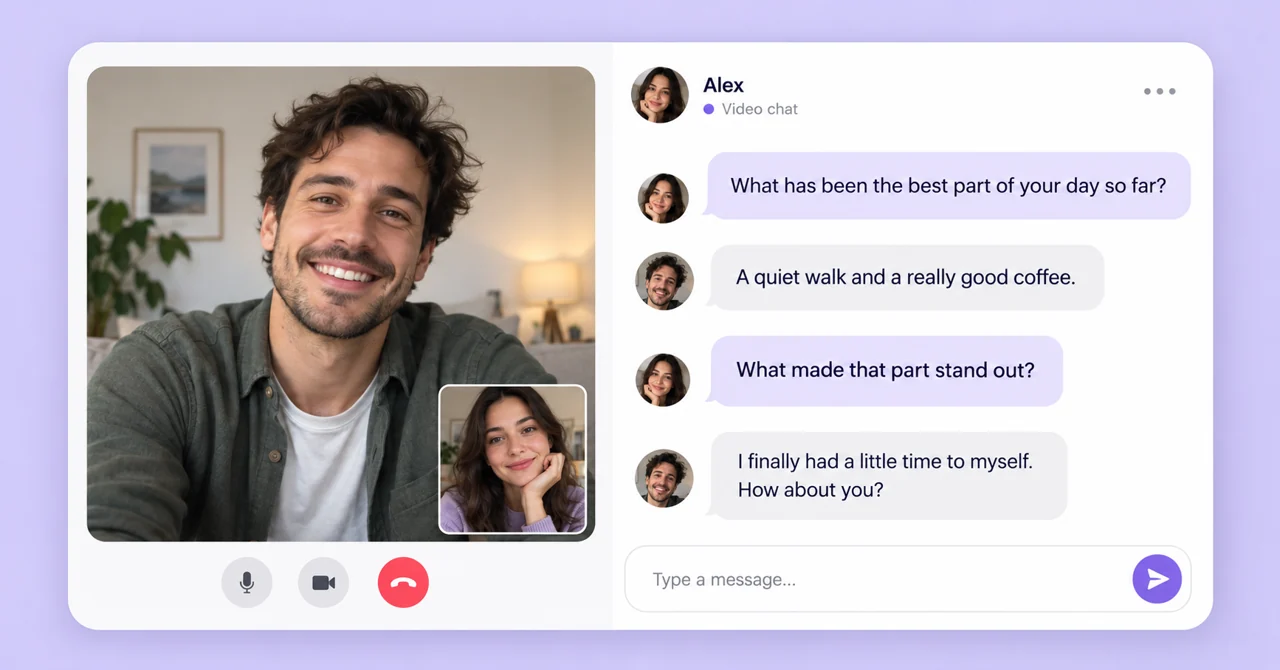
1. “What has been the best part of your day so far?”
This question gives the person room to choose a positive moment without explaining their entire day.
Follow-up: “What made that part stand out?”
Share your own small highlight, too. An enjoyable conversation does not require an extraordinary story.
2. “When you get an hour to yourself, what do you usually do?”
This can lead to books, games, exercise, cooking, or simply resting.
Follow-up: “Is that something you have always enjoyed?”
Avoid treating the answer as a productivity contest. Watching a favorite show is just as valid an answer as learning a new skill.
3. “Are you more of a morning person or a night person?”
A simple preference can introduce a conversation about routines and favorite activities.
Follow-up: “What do you like doing at that time?”
You can compare habits without asking for their work schedule or other details they may prefer to keep private.
4. “What is a small thing you are looking forward to this week?”
The word “small” leaves room for an ordinary answer, such as trying a recipe or watching a new episode.
Follow-up: “Is that part of your usual routine or something different?”
Offer your own answer if they need a moment to think.
5. “What would your ideal weekend look like?”
This gives you a way to discuss preferences without assuming the person has exciting plans.
Follow-up: “Would you rather plan everything or decide as you go?”
A quiet weekend at home can lead to a conversation just as easily as travel or a busy social calendar.
Music, Movies, and Entertainment
Asking for a recommendation gives the other person something specific to talk about. Explain your own tastes, but leave space for different preferences. You do not need to agree on a favorite movie to enjoy discussing it.
6. “What song have you had on repeat lately?”
Music offers several possible directions, including artists, genres, lyrics, and memories.
Follow-up: “What do you like about it?”
If you do not recognize the song, ask how they would describe it rather than pretending you know it.
7. “Have you watched anything recently that you would recommend?”
This leaves room for a movie, series, documentary, or online video.
Follow-up: “What kind of mood should someone be in to watch it?”
You can also ask for a spoiler-free description if you might watch it yourself.
8. “What is a movie or show you enjoy watching again?”
A familiar favorite can be easier to discuss than the latest release.
Follow-up: “Do you notice something new each time?”
Share what brings you back to your own favorite: the humor, characters, atmosphere, or memories associated with it.
9. “If you could see any musician live, who would you choose?”
This works whether someone regularly attends concerts or has never been to one.
Follow-up: “Which song would you most want to hear?”
Keep the conversation focused on their interest instead of asking about expensive tickets or why they have not attended.
10. “What kind of videos do you watch when you want to relax?”
Answers might include comedy, cooking, gaming, travel, or animals.
Follow-up: “Is there a creator or channel you keep coming back to?”
If your tastes differ, ask what they enjoy about the format. Curiosity gives the conversation somewhere to go.
Food, Travel, and Everyday Culture
These questions invite someone to describe their own experiences. Avoid expecting one person to explain an entire country or culture. Ask what they personally enjoy, and let them decide whether to share a broader cultural perspective.
11. “What food would you recommend to someone trying it for the first time?”
This opens a conversation about flavors, favorite meals, and personal preferences.
Follow-up: “What do you like most about it?”
Do not describe unfamiliar food as strange. Ask how it tastes or what makes it worth trying.
12. “Is there a dish you enjoy making yourself?”
The answer could be an elaborate meal or something very simple.
Follow-up: “How did you learn to make it?”
If they do not enjoy cooking, switch naturally to a dish they like eating rather than insisting on an answer.
13. “What is your favorite kind of place to spend a free afternoon?”
A park, beach, library, or café can tell you something about their interests without revealing their location.
Follow-up: “What makes it a good place for you?”
Ask about the atmosphere or activity rather than the exact address.
14. “Is there a place you would like to visit someday?”
Travel plans can be hypothetical, so the person does not need previous travel experience.
Follow-up: “What would you want to do there first?”
Share your own choice and the reason behind it. Avoid turning the exchange into a comparison of who has visited more places.
15. “What is a tradition you personally enjoy?”
This could mean a holiday, a seasonal activity, or a simple personal routine.
Follow-up: “How do you usually take part in it?”
Let them decide how much background to provide. You can show interest without asking about private family relationships or beliefs.
Hobbies, Skills, and Shared Interests
A shared interest can give a conversation direction. If you know little about their hobby, say so and ask a beginner’s question. You do not need expertise to be interested in what someone enjoys.
16. “What hobby would you like to have more time for?”
This invites someone to discuss an interest even if they have been too busy to pursue it.
Follow-up: “What got you interested in it?”
Ask what they enjoy about the activity instead of immediately suggesting how they should make more time.
17. “What is something you have been learning lately?”
The answer might involve a language, recipe, game, instrument, or practical skill.
Follow-up: “What has been the most enjoyable part so far?”
Keep it conversational. You are asking about their experience, not testing what they have learned.
18. “Do you enjoy any games, sports, or creative activities?”
This broad question offers several ways to respond.
Follow-up: “What do you like about that activity?”
Once they choose a topic, stay with it. Ask about the experience rather than switching immediately to another item on the list.
19. “What could you talk about for ages without getting bored?”
This lets the other person introduce a subject they care about.
Follow-up: “What is one thing a newcomer should know about it?”
Listen for something you can respond to. You do not need to understand every detail to follow their enthusiasm.
20. “If you could try a new hobby for a month, what would it be?”
A hypothetical question removes the need for an existing hobby or a definite plan.
Follow-up: “Would you rather learn on your own or with someone?”
Share your own choice and what attracts you to it.
Light Imaginative Questions
Use these when the conversation already feels relaxed. Some people enjoy hypothetical questions; others prefer everyday topics. If a question does not seem to interest them, move on without trying to persuade them to answer.
21. “If you could instantly learn one skill, what would you choose?”
This can lead to practical ambitions or playful ideas.
Follow-up: “What would you use it for first?”
Explain your own answer with an example. “Playing piano so I could learn my favorite songs” gives them something specific to respond to.
22. “Would you rather spend a day by the sea, in the mountains, or in a city?”
Offering a few options makes the question easy to answer.
Follow-up: “What would you do there?”
Leave room for a different choice. The options are conversation prompts, not rules.
23. “If you had a completely free day tomorrow, how would you spend it?”
This invites the person to imagine a day without ordinary responsibilities.
Follow-up: “Would you plan it or decide as you went?”
Avoid judging an answer that involves resting. A free day does not have to become an adventure.
24. “What ordinary thing deserves more appreciation?”
This can lead to thoughtful or funny answers, from comfortable shoes to a good breakfast.
Follow-up: “What makes it special to you?”
It also gives you a chance to share something small you have noticed recently.
25. “If you could give your younger self one useful tip, what would it be?”
Save this for a conversation that already feels comfortable.
Follow-up: “What helped you learn that?”
Accept a light answer. If the person seems hesitant, choose another topic rather than asking them to explain a difficult experience.
How to Turn an Answer Into a Conversation
A question starts the exchange; your response helps it continue. Listen for one detail in their answer. Acknowledge it before connecting it to your own experience.
For example:
You: “What song have you had on repeat lately?”
Them: “An acoustic cover I found yesterday.”
You: “I like acoustic versions too. What did you like about this one?”
This feels more connected than immediately asking about their favorite food.
Balance questions with comments. If you only ask questions, the other person may feel interviewed. If you only share your own stories, they may struggle to join in.
What to Say During an Awkward Pause
Give silence a moment. The other person may be thinking, dealing with a delay, or choosing words in another language.
If you want to change topics, try:
“Want to talk about something else? What do you usually do for fun?”
If replies remain short, avoid piling on questions. You can say, “No worries if you are not in the mood to chat. Nice meeting you!” and finish politely.
Keep Questions Simple Across Languages
Ask one question at a time. Short sentences and familiar words can make an exchange easier to follow. “What music do you like?” is more direct than an expression such as “What is your ultimate guilty-pleasure anthem?”
Ask whether written messages would be easier when speaking is difficult. For information about LivCam’s message translation and account features, read the LivCam FAQs. Message translation and live speech translation are different features; check what is supported before relying on either.
End the Conversation Comfortably
For a pleasant goodbye, try:
“It was nice talking with you. Have a good rest of your day!”
If someone pressures you to share private information or send money, end the interaction and use the available reporting tools. Read the video chat community guidelines before joining.
Choose two or three starters you would enjoy answering, begin with one, and follow the response. If you want to meet someone individually, explore one-on-one video chat on LivCam and check the current access requirements before starting.